


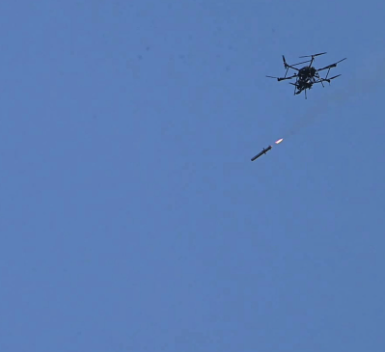
The trials mark a major milestone in the development of advanced precision strike systems designed for deployment from unmanned aerial platforms. According to defence officials, the missile demonstrated high accuracy, reliable guidance performance and operational flexibility during the test missions.
The ULPGM-V3 has been developed to engage a variety of targets, including enemy bunkers, lightly armoured vehicles, personnel and low-speed aerial threats. Equipped with advanced guidance and control systems, the missile is capable of carrying out precision strikes in diverse operational environments.
Officials stated that the successful validation of both air-to-ground and air-to-air engagement capabilities significantly enhances the combat potential of indigenous UAV platforms. The missile system has been designed with modular architecture, enabling integration with multiple unmanned systems being developed within the country.
The achievement is expected to strengthen India’s self-reliance in defence technology while reducing dependence on imported precision-guided munitions. It also underlines the growing capability of Indian scientists and defence engineers in developing sophisticated next-generation weapon systems.
Defence experts noted that the successful trials further reinforce DRDO’s role in advancing indigenous military technologies and enhancing the operational preparedness of the Armed Forces. The missile is expected to provide a major tactical advantage in future battlefield scenarios involving both conventional and asymmetric threats.
